

When it comes to outerwear manufacturing, choosing the right country is one of the most important decisions a European brand will make. The wrong choice can cost you time, money, and your reputation. The right one can become a long-term competitive advantage.
As a European brand, finding the right manufacturing partner is one of the most important decisions you’ll make. The wrong choice can cost you time, money, and your reputation. The right one can become a long-term competitive advantage.
Outerwear Manufacturing: A Comparison of 4 Regions
Over the past decade, sourcing has shifted. Turkey has grown. Southeast Asia has emerged. Local European production has seen a revival. And China, despite rising costs and geopolitical tensions, remains the dominant force in global apparel manufacturing.
But here’s the truth: there is no single “best” country. There is only the best country for your specific product, order size, and target market.
This guide compares the four main sourcing regions for outerwear — China, Turkey, Southeast Asia (India, Myanmar, Cambodia, Vietnam), and local European production — so you can make an informed decision.
1. Outerwear Manufacturing in Southeast Asia (India, Myanmar, Cambodia, Vietnam)
Best for: Basic knitwear, cotton t-shirts, simple woven tops, large-volume orders with low technical complexity.
Strengths:
- Lower labor costs than China and Turkey.
- Preferential trade agreements with the EU (e.g., GSP+ for some countries).
- Young, growing workforce.
- Increasing foreign investment in textile infrastructure.
Weaknesses for outerwear:
- Limited expertise in complex outerwear construction (down filling, PU coating, wool blending).
- Most technical fabrics, trims, and accessories are still imported from China, increasing lead times and cost.
- Quality consistency can vary widely between factories.
- Infrastructure and logistics challenges in some countries (e.g., Myanmar’s political situation).
- Smaller factories often lack the engineering capability to handle difficult patterns and functional finishes.
Verdict: Great for basic apparel. Not yet competitive for high-quality padded jackets, down coats, or technical outerwear.
2. Outerwear Manufacturing in Turkey
Best for: Fast fashion, quick replenishment, mid-to-premium brands that value proximity to Europe.
Strengths:
- Close to Europe — short shipping times, lower freight costs, easier communication.
- EU Customs Union member — no tariffs on most industrial goods.
- Strong design and trend responsiveness.
- Good quality for woven garments and denim.
- Smaller MOQs are often possible.
Weaknesses for outerwear:
- Higher labor costs than Asia.
- Limited capacity for very large orders (500,000+ pieces).
- Still imports many technical fabrics and down fillings from China.
- Less competitive pricing for price-sensitive markets.
Verdict: Excellent for fast-turnaround, mid-volume orders. Less ideal for large-scale, technically complex outerwear at competitive prices.
3. Local Outerwear Manufacturing in Europe
Best for: Luxury brands, small-batch production, “Made in Europe” storytelling, sustainability-focused labels.
Strengths:
- Shortest lead times (weeks, not months).
- Lowest shipping costs and carbon footprint.
- Easier quality control and communication.
- Strong “Made in Europe” marketing value.
- High labor and environmental standards.
Weaknesses:
- Very high labor costs — often 5-10x higher than China.
- Limited production capacity.
- High MOQs for many factories.
- Difficulty scaling for growing brands.
- Shrinking technical workforce in some countries.
Verdict: Perfect for luxury and small-batch. Not viable for mid-market brands needing scale and competitive pricing.
4. Outerwear Manufacturing in China
Best for: Complex outerwear — down jackets, padded coats, PU jackets, wool coats, technical shells — at scale, with competitive pricing and reliable quality.
Strengths:
- Complete supply chain: Fabrics, down, PU coatings, zippers, trims, labels — everything is available locally. No waiting for imported materials.
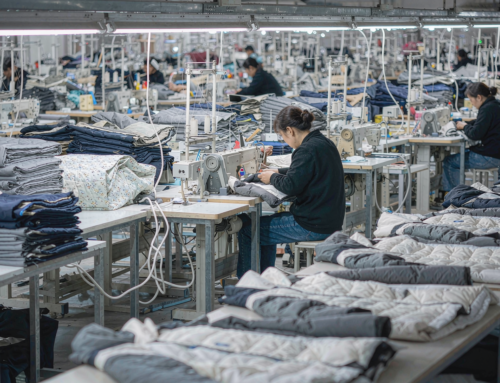
- Technical expertise: Chinese factories have deep experience in complex outerwear construction, including down filling, quilting, bonding, and functional finishes.
- Scale: Factories can handle orders from 500 pieces to 500,000+ pieces without sacrificing quality.
- Competitive pricing: While labor costs have risen, China remains the best value for technically complex outerwear.
- Speed: Sampling in 3-7 days; a first order runs 60-90 days and repeats 45-60 days for established factories.
- Certifications: BSCI, OEKO-TEX and ISO certifications are widely available, meeting European compliance requirements. (GRS is available through many mills.)
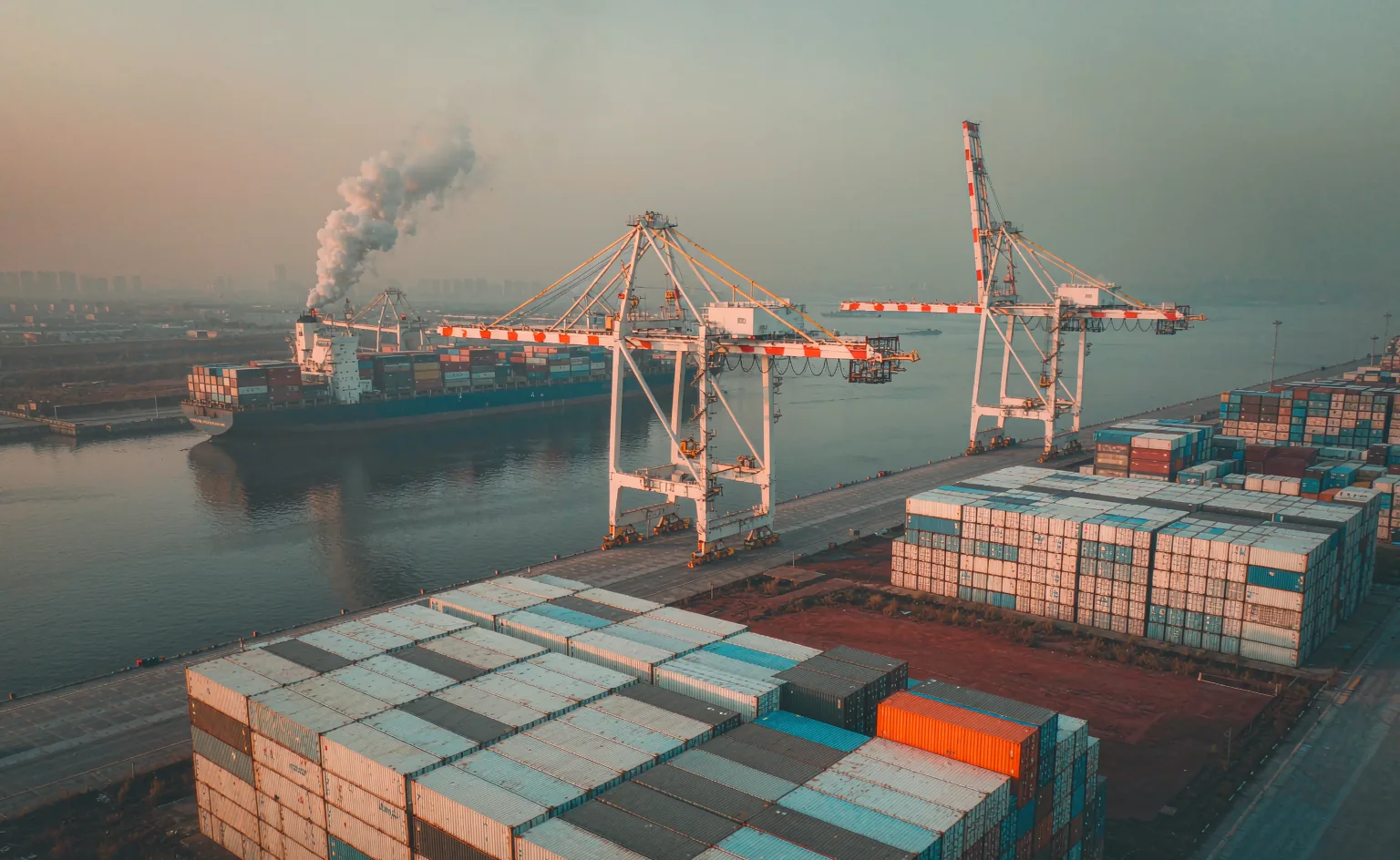
- Export infrastructure: FOB Shanghai is our standard port; Shenzhen and Ningbo are available on request.
Weaknesses:
- Longer shipping times to Europe (4-6 weeks by sea).
- Higher labor costs than Southeast Asia.
- Tariffs may apply depending on product category and origin rules.
- Communication and cultural differences require a reliable partner.
Verdict: For any brand producing complex outerwear — down, padded, PU, wool — China remains the most capable and cost-effective option.
Why China Still Leads for Complex Outerwear
When it comes to outerwear, the difference is not labor cost. It is engineering capability.
A basic t-shirt can be made almost anywhere. A down jacket with 90% white goose down, a PU-coated shell, a wool blend, or a technical membrane requires:
- Specialized machinery (down filling machines, ultrasonic welders, seam sealing equipment).
- Experienced pattern makers and sample technicians.
- Reliable access to certified down, recycled fabrics, and functional trims.
- Strict quality control across multiple production stages.
This is where China’s mature supply chain and decades of export experience become a decisive advantage.
What to Look for in a Chinese Outerwear Partner
Not all Chinese factories are equal. When evaluating a potential partner, look for:
- Specialization: Do they focus on outerwear, or do they make everything?
- Certifications: BSCI, OEKO-TEX — and can they provide current audit reports?
- Communication: Do they respond within 24 hours? Do they have English-speaking staff?
- Transparency: Will they show you their factory (in person or via video)? Do they welcome third-party inspections?
- MOQ: Can they support mid-market brands with 500-piece minimums?
We hold strict quality and social compliance standards, including BSCI certification, to ensure every shipment meets international retail standards.
At Xinhua Apparel, we have spent nearly a decade refining our process for European mid-market brands. Our 5,000 m² factory in Xuancheng produces 500,000 pieces annually. We are BSCI certified (GRS previously held, 2018-2022), and we offer flexible MOQs starting at 500 pieces per style.
If you are sourcing outerwear for your next collection, we would love to talk. Our sampling takes 3-7 days, our first order runs 60-90 days and repeats run 45-60 days from sample approval to shipment.
Contact us today to discuss your project or request a quote.
To learn more about our process, read our China Woven Outerwear Manufacturer Guide.